
Highlights:
- Presenting star Naga Munchetty earns approximately £360,000 annually, making her one of BBC’s top-paid presenters.
- Her career has included interviewing high-profile figures and participation in various shows, including Strictly Come Dancing.
- Controversies surrounding her on-air comments have led to investigations and discussions about BBC’s conduct guidelines.
Introducing Naga Munchetty’s Influential Role at BBC
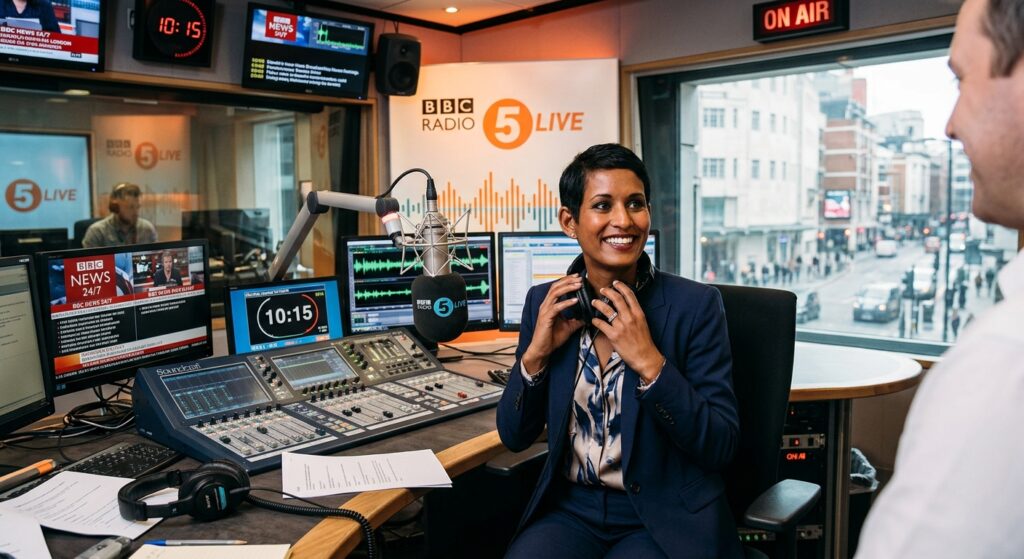
Naga Munchetty, an esteemed presenter on BBC Breakfast, has solidified her position as a leading media figure through her engaging interviewing style and wide-ranging commentary on current events. Earning roughly £360,000 a year, she stands among the highest-paid presenters at the BBC, reflecting not only her talent but the audience’s appreciation for her work. With a legacy that includes conversations with notable personalities such as Hillary Clinton, Michelle Obama, and Sir David Attenborough, Munchetty has carved out an influential space within British journalism.
The significance of her role is magnified not just by her salary but also by her ability to tackle pressing issues and interact with a diverse array of guests. Her past appearances on shows like Strictly Come Dancing showcase her versatility, while her coverage of political and social issues has made her a household name. However, this prominence, arguably, comes with a price, as her position has also placed her at the heart of various controversies, stirring discussions about media ethics and responsibility.
Controversies and Challenges in Munchetty’s Career
Throughout her career, Munchetty has faced criticism, particularly surrounding her comments on social media and reactions to politically sensitive events. One notable incident emerged in 2019 when she was found to have breached the BBC’s guidelines over remarks about a Donald Trump tweet that targeted four female politicians of color. However, this verdict was later reversed, signaling the complexities of maintaining editorial independence alongside broadcaster guidelines. Such incidents exemplify the delicate balance presenters must achieve in navigating their personal opinions while fulfilling their roles as impartial journalists.
In 2021, after their response to a government minister’s flag sparked complaints, Munchetty and her co-presenter were reminded of their professional responsibilities. Her subsequent apology for engaging with “offensive” tweets highlighted the fragility of public perception in the realm of broadcasting. Furthermore, with reported behind-the-scenes tensions during the summer of 2025, the conversation related to workplace conduct within media organizations has gained renewed urgency, placing mounting pressure on the BBC to ensure a professional environment for its employees.
Implications and Future Considerations
The implications of Munchetty’s experiences extend beyond her individual career, touching on broader issues of media ethics, accountability, and cultural sensitivity. The conversations surrounding her controversies have ignited discussions about the role of presenters in shaping public discourse and the potential for personal bias to filter into broadcasts. As the media landscape continues to evolve, finding the right balance between personal expression and professional conduct remains a pivotal challenge for both presenters and broadcasters.
Moreover, Munchetty’s case serves as a reminder of the need for transparent communication within organizations like the BBC. Enhancing training and guidance for presenters could help mitigate potential controversies and reinforce the importance of journalistic integrity. As the BBC and similar institutions navigate their responsibilities amidst evolving social climates, questions about the intersection of personal views and professional duties will likely remain at the forefront.
In conclusion, Naga Munchetty’s stature as a prominent presenter at the BBC showcases both the rewards and challenges of public broadcasting. While her impressive interviewing skills contribute significantly to her success, her encounters with controversy serve as a reflection of the complex dynamics at play in the media industry. With evolving discussions on conduct and ethical journalism, what steps should be taken by media organizations to support their presenters? How can public figures like Munchetty maintain their integrity while addressing important societal issues? And how can audiences navigate the complexities of media consumption with greater understanding?
Editorial content by Rowan Parker