

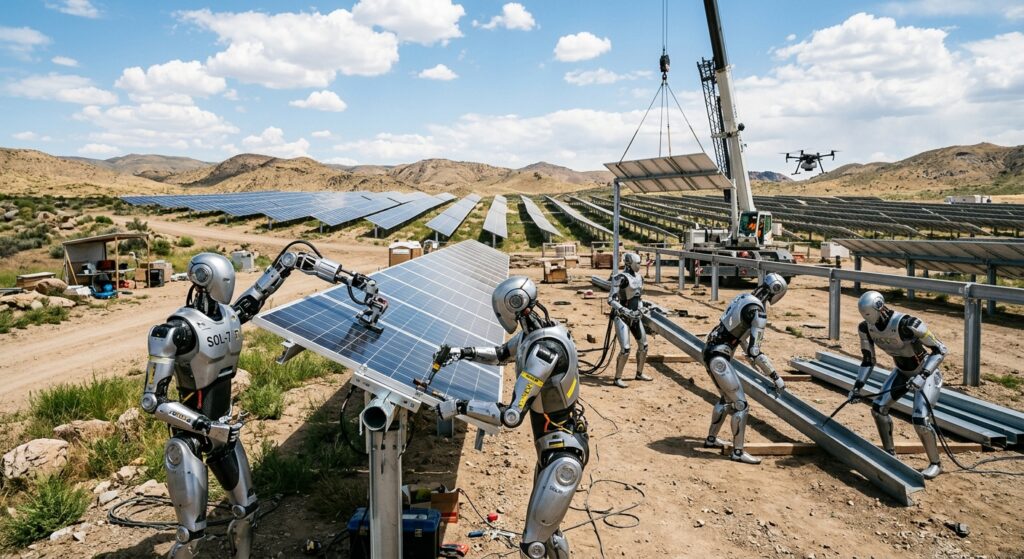
Solar energy’s rapid expansion is crucial for combatting climate change, but a significant labor shortage threatens its installation. Innovative companies like Gritt aim to deploy AI and robotics to tackle these challenges on construction sites.
Highlights
- Demand for solar energy is surging, but a labor shortage hampers installation efforts.
- Gritt, a startup founded by Carnegie Mellon-trained roboticists, utilizes AI and off-the-shelf hardware to streamline solar panel installation.
- The integration of advanced AI models allows for greater efficiency and potential expansion into other construction tasks.
The Solar Energy Challenge
As the globe intensifies efforts to harness renewable energy, solar power is at the forefront of this transformation. Countries and companies alike are striving for energy independence while aiming to curtail the detrimental impacts of climate change. However, amidst this significant push towards more sustainable energy sources, the solar industry faces an urgent labor shortage, creating a bottleneck that threatens many ongoing and future installations.
In light of this situation, innovations in technology, particularly in robotics and artificial intelligence, are becoming crucial. The latest advancements promise to not only alleviate some of these labor concerns but also revolutionize how tasks are performed on construction sites. This transformation holds significant implications for the future of renewable energy installations, making it a vital topic of discussion for energy producers and environmentalists alike.
Robotic Solutions for Solar Installation
Enter Gritt, a pioneering startup established by two roboticists from Carnegie Mellon University, CEO Puneet Puri and CTO Vishal Dugar. Gritt has developed an AI-driven approach that enhances the capacity of existing labor forces by utilizing off-the-shelf hardware, such as robotic arms and skidders, instead of creating new robots from the ground up. Its initial application focuses on efficiently unloading and installing large solar panels with remarkable precision.
The impact of Gritt’s systems is substantial, transforming the productivity rate of installation crews. A typical crew can install around 800 solar panels in a day; however, with the aid of Gritt’s technology, that number skyrockets to an impressive 3,000 to 4,000 panels daily. As the company prepares to deploy more systems across various job sites, it aims to support the installation of 2.8 gigawatts of solar power over the next 18 months, serving notable power construction companies and shaping the landscape of solar energy deployment.
The Future of Construction and Implications
While Gritt’s primary focus currently revolves around solar panel installation, the company envisions broader applications for its AI systems within the construction industry. The founders aspire to incorporate a variety of tasks, including fastening solar panels and assisting in building structural components, which could lead to significant efficiency gains across a range of construction projects. The development in AI capabilities plays a pivotal role—allowing for faster training of systems for new tasks, reducing what once took weeks into mere days.
The implications of Gritt’s advancements extend beyond mere labor replacement. The startup’s systems could enhance decision-making on construction sites, monitoring environmental variables and alerting crews to potential hazards, thus fostering a safer working environment. This marks a shift not only in how construction is done, but how projects are managed altogether, cementing the importance of AI as a crucial component in the construction industry’s future.
In summary, as solar energy continues to gain momentum in the global energy landscape, the challenges posed by a labor shortage could soon be mitigated through innovative solutions offered by companies like Gritt. The integration of AI and robotics into these operations not only aids in installation efficiency but also enhances overall safety and decision-making on construction sites. As we look to the future of energy production, how will advancements in technology shape other areas within the industry? What other labor-intensive sectors could benefit from similar innovations? How can we ensure that technologies designed to assist workers are implemented thoughtfully and ethically?
When you purchase through links in our articles, we may earn a small commission. This doesn’t affect our editorial independence.
Editorial content by Phoenix Riley